
Summary
I am Rudy Castan, an OWIS parent of Shinyu and Hayu, a university computer science lecturer and a former professional game programmer. I would like to teach after-school courses in which students make their own interactive art, programs and games.
My main offer is three courses in game making and creative coding. I can also run two LEGO SPIKE robotics courses. Each course is a block of ten 1-hour lessons that ends with something students made and can show their families.
These are courses I could offer, not a plan to run all five at once. I can teach two courses per cycle, possibly three, preferably on Monday, Wednesday or Friday afternoons, and I ask OWIS to choose the ones that suit the school best.
The menu at a glance
| Course | Grades | Device | Students make | Potential competitions |
|---|---|---|---|---|
| 1. Game Studio | Grades 4–12 | Student iPads with keyboards (Grades 4–5) or Mac laptops (Grades 6–12) | A team-made game, played by families at a launch day | — |
| 2. Creative Coding with JavaScript | Grades 4–5 | Student iPads with keyboards | Interactive drawings, animations and a mini project | Bebras; International Junior Informatics Olympiad |
| 3. Creative Coding with C++ | Grades 6–12 | Student Mac laptops | Graphics programs and a small game | Bebras; International Junior Informatics Olympiad |
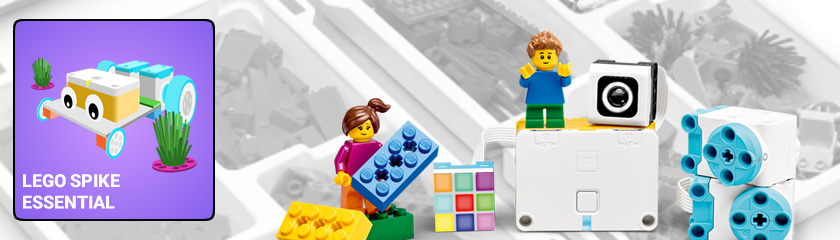
| 4. LEGO SPIKE Robotics: SPIKE Essential | Grades 1–5 | School SPIKE kits; one device per kit (school devices for Grades 1–3, student iPads for Grades 4–5) | Robots that complete missions on a field | National Robotics Competition, Lower Primary |
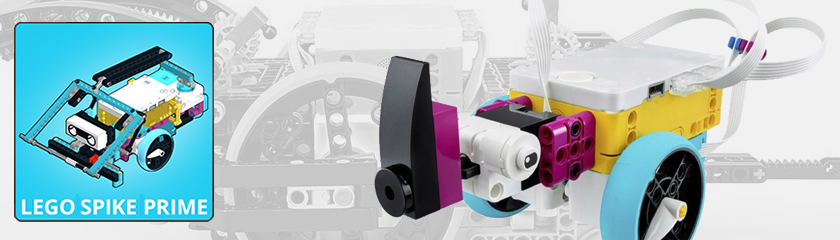
| 5. LEGO SPIKE Robotics: SPIKE Prime | Grades 6–12 | School SPIKE kits with student Mac laptops | A competition-style robot coded in word blocks, then Python | National Robotics Competition (Upper Primary, Secondary); World Robot Olympiad |
The five courses
Game making and creative coding
-
Course 1
Game Studio: Make a Game as a Team
Form a studio, make a game together, and let your family play it at launch day.
-
Course 2
Creative Coding with JavaScript
Make the computer draw anything you can imagine, then make it move and respond to your touch.
-
Course 3
Creative Coding with C++
Write real C++, the language games are made in, and finish with a small game you programmed yourself.
Also available: LEGO SPIKE robotics
How the courses fit the PYP
Each course's objectives and lessons are written in terms of the Approaches to Learning (ATL) skills (thinking, research, communication, social and self-management), and every course gives students practice in being inquirers, thinkers, communicators and risk-takers from the IB Learner Profile.
One unit of inquiry connects directly: the Grade 5 "How We Express Ourselves" unit looks at how emerging technologies, including AI, influence how people create and express themselves. Game Studio, in particular, follows the same cycle as the Grade 5 PYP Exhibition: choose a question, plan, make, test, and present to an audience.
Screen time and safety
- Making, not consuming. No course involves playing commercial games or watching videos beyond short demonstrations.
- Hands-on work. Lessons include planning and reflection on paper. Robotics students spend much of each lesson building with their hands, and Game Studio teams design on paper, draw their art by hand and test each other's games face to face.
- No personal accounts. Students do not create online accounts or share work publicly. Their work stays on school or student devices and is shown in class.
- AI tools. Students in Grades 1–5 do not use AI chatbots. In Grades 6–12, AI tools may be used only as a tutor, to explain an error or give a hint, and never to write a student's code.
- Care of equipment. Kits are checked out and packed away with a parts checklist each lesson.
Practical requirements
The creative coding courses and Game Studio need an ordinary classroom. The SPIKE courses use the STEM Room and the school's SPIKE kits. Kits, devices, enrolment and timetabling can be arranged once the school has chosen its courses.
Arrangement and payment
I offer these courses as an individual, not as a company. Families would enrol and pay through OWIS at the rate OWIS sets for ECAs (S$476.90 per ten-lesson block in AY2026–27, including GST). Instead of being paid directly, I ask that my fee be credited against my children's OWIS tuition, at an amount to be agreed with the school.
About the instructor
I am a Senior Lecturer in computer science at DigiPen Institute of Technology Singapore (since January 2026). From 2017 to 2025 I taught every first- and second-year computer science course of DigiPen's BS in Computer Science in Real-Time Interactive Simulation at the DigiPen–KMU programme at Keimyung University in Daegu, Korea. These courses are offered independently and are not affiliated with or endorsed by DigiPen Institute of Technology.
- Teaching beginners through making. I taught an introduction to programming for university students new to coding, using JavaScript and p5.js, and wrote doodle, a C++ library modelled on p5.js, so that first-year university students could draw and animate from their first week.
- A game workshop for school students. In 2021 I designed and taught a five-day p5.js game-programming workshop for high-school students, part of the DigiPen–KMU summer workshops. Students pitched their own games on day 4 and presented them on day 5.
- Team projects. I helped teach team game-project courses in Korea and now teach team game and software project courses in Singapore, with milestones, peer feedback sessions and final presentations.
- Game jams. I hosted three game jams for DigiPen–KMU students (Summer 2024, February 2025 and August 2025), each built around a theme such as "Start Small" or "One Time Use", with the finished games published online. At these jams I also made games with Shinyu and Hayu: on Square Game, Shinyu designed the levels and Hayu drew the art and recorded the voices.
- Industry. From 2009 to 2017 I worked in the games industry, shipping mobile and online games such as Diner Dash Rush and League of War.
- Teaching AI. In 2026 I co-taught one day of an AI application bootcamp for graduates, and wrote and presented a workshop that helped non-programmers build their own tools.
- Preparing for robotics. For the SPIKE courses I will build on LEGO Education's teacher materials and Carnegie Mellon Robotics Academy's free SPIKE curricula, and complete LEGO's SPIKE teacher training before the first cycle. Their core ideas (loops, decisions and reacting to input) are the same ones I teach in programming.
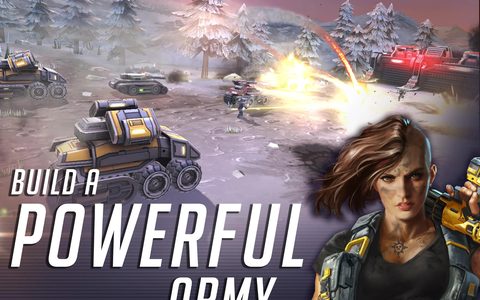 League of War
 My Horse
 Psych!
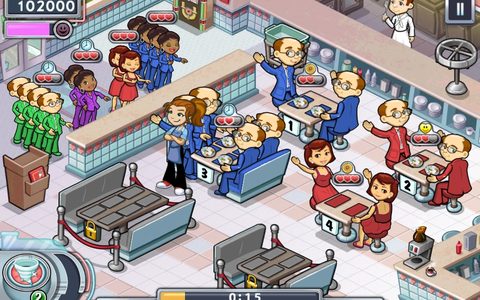 Diner Dash Rush
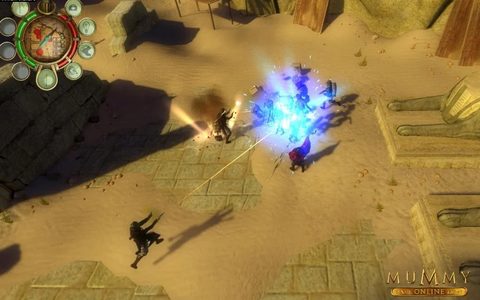 The Mummy Online
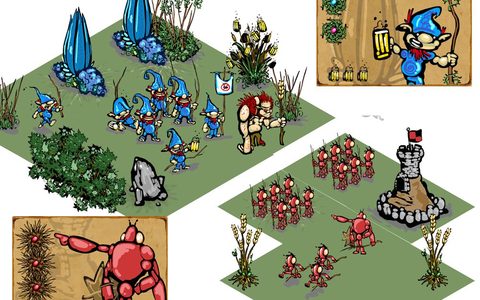 Nintendo DSi strategy demo
A former colleague described me as "professional, patient and easy to talk to". My favourite part of teaching is the "aha!" moment, when something a student has been struggling with finally works. My full resume can be downloaded at the top of this page.